“Fostering brilliance and hard work in young minds”
Varap, Khemani Industry Area, kalyan-Murbad Rd, Ulhasnagar, Maharashtra 421301
Welcome to Narayana e-techno school, Ulhasnagar, Thane
With 40 years of Academic Excellency….. The Narayana Group is Asia’s largest educational conglomerate with over 360,000 students and 35,000 experienced teaching and non-teaching faculty in over 560 centres. Spread across 13 states, Narayana is hosting a bouquet of schools, junior colleges, engineering, medical and management institutions, coaching centres along with IAS training academy, has already set a benchmark in academic excellence by continuously delivering top and matchless results in Intra and International competitive examinations.
ALSO FOLLOW US ON
Tips to manage distraction in children
For children of today’s age and time there is problem of plenty. They have abundant choices when it comes to resources. For instance, when they are watching a video on YouTube, many more similar videos pop-up in the recommended column and they get distracted to explore the new ones without completing the earlier video. Let’s look at what this has to do with distraction.
Attention span refers to an individual’s ability to respond to a stimulus or object over a period of time. This ability is also known as sustained attention or vigilance. A person is exposed to numerous stimuli in the environment, the individual then chooses what they focus on and process. Not every stimuli that is present in the environment will be attended to or processed. The ability to focus and sustain attention is normally developed by age 10 years. Hence, as stated in the example of YouTube video, distractions comes into play when a more appealing option comes their way.
Distraction in children may lead to disruptions in academic or personal life.
Here are some tips on how to make children focus on the task at hand:
- To minimise distraction in children it is of utmost importance to understand the reason behind it. Here are some important questions to ask, has the child been studying for too long? is the child unwell? is the child unable to grasp the concept? Or is there a problem greater than that?
- Allow the child to focus on one task at a time. The best way to do that is to maintain and practice a schedule. For instance, assign a particular time in the day for studies. Reinforce this and maintain this schedule.
- Assign tasks to the child in a sequential manner. This will help the child to think in an organised manner and draw a mental map of tasks to accomplish and not to deviate from the assigned tasks.
- The greatest tip is to allow your child to enjoy intermittent so that the tasks appears less daunting or overwhelming.
- When a child has successfully completed his task reward your child. The reward need not be tangible, it can be intangible like warm hug, appreciation, extra playtime, screentime and so on.
- Display attention-focused behavior. Children learn by modelling those around them, thus, if parents sit down with their children to do homework then that should be the task in focus. However, if the parents are on their phones while helping children in homework or are doing multiple things at this time the child feels that this is normal.
It is also imperative for parents to observe and find out if the child has a deep rooted problem that is amounting to distraction and inability to focus on major tasks. There are many learning disabilities like dyslexia, dyscalculia and Language Processing Disorder that trigger lack of attention but parents fail to detect the main reason and keep working on improving the attention span of children.
Parents can use the above mentioned tips in order to increase attention span and reduce the scope for distraction. By taking conscious steps, parents can help the children focus on the task at hand

PREPARING STUDENTS FOR FUTURE BY OFFERING A FUTURISTIC CURRICULUM
While the world is extending reality to augmented reality and virtual reality and intelligence to artificial intelligence, it is time for the schools to refurbish the curriculum around the new and novel concepts and instil analytical and problem solving skills in students so that they are geared up to manage the challenges of the technology-driven world and life of tomorrow. At the same time, concept of teamwork, communication, ethics and exploration which are found ruling in the past decades curriculum should remain intact as they form a strong underpinning for the student’s holistic growth.
It is interesting to look here that the students who are in primary school today will complete their senior secondary in mid 30s; their graduation and post graduation by late 30s; start working in 40s and will work till 70s. The implication is clear –the education imparted to the students must cater to what will be required ten, twenty, thirty years from now. It indeed is a time for overhauling the curriculum and bring more futuristic subjects to the platter and also modify the pedagogical methods.
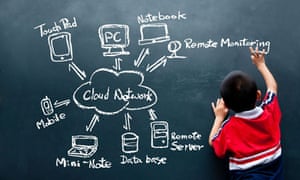
The future curriculum should focus on problem solving, analytical thinking, imbibing imagination and creativity and digital skills while retaining the advantages of team work and collaboration. Technology should be made to penetrate into the system in teaching, learning, conducting examinations and evaluating. Students should start learning about computers and their application from a tender age. The focus of computers should not be coding alone but experimenting with imagination and creativity in whichever way possible. There should be intervention of computational thinking and data analysis too. Competitions should aim at fostering the imaginative powers in students where only sky should be the limit. Talk of cybersecurity, talk of deep learning, talk of robotics and you will be able to nurture a whole new bunch of creative, insightful, interpretive and ingenious students for the future. Let us not forget about the traditional focus on ethics, values, and moral science which are timeless in nature and will be as useful in future as they were in the past.
Education does not end with school; neither does it end with examination nor with degree. It is the knowledge that the student broadens and builds to a life-long learning by absorbing the truth about life. For a student to make a comprehensive use of his present and future, curriculum needs to undergo continuous improvement and now is the time to include the futuristic curriculum.
Get new content delivered directly to your inbox.
 Narayana Etechno school Ulhas